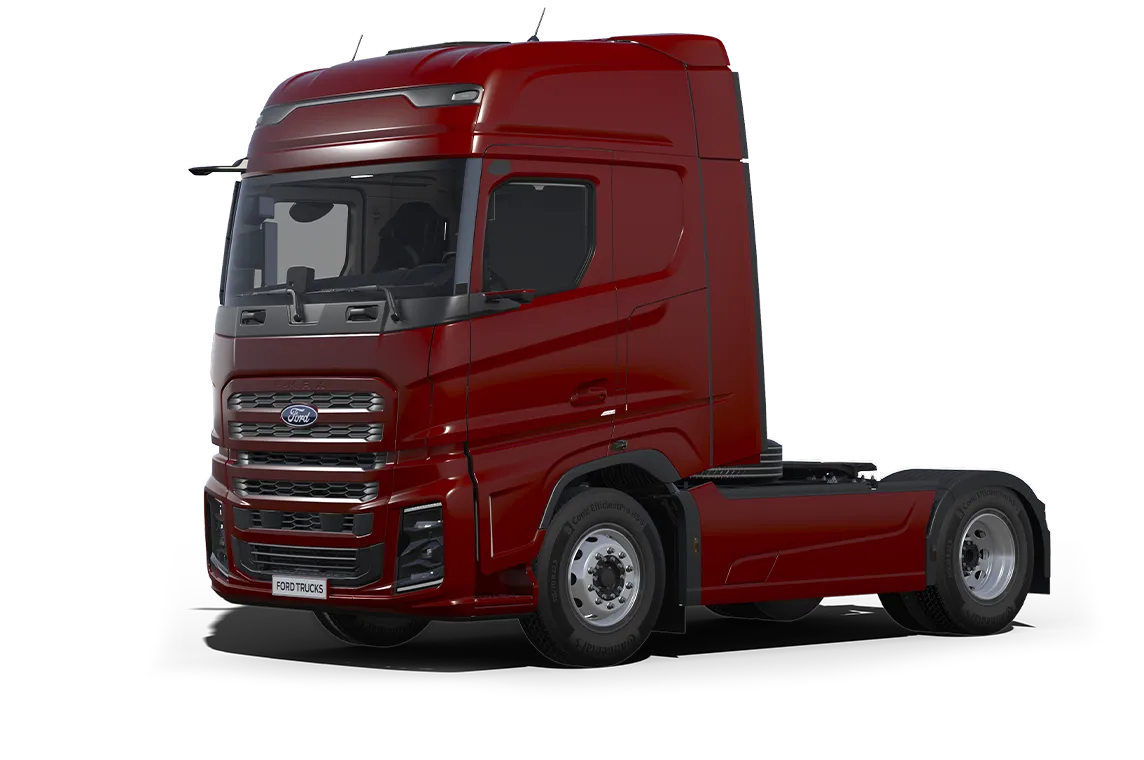
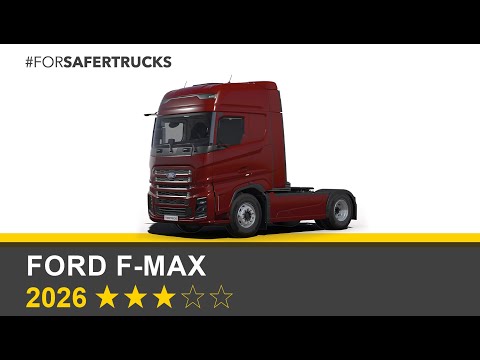

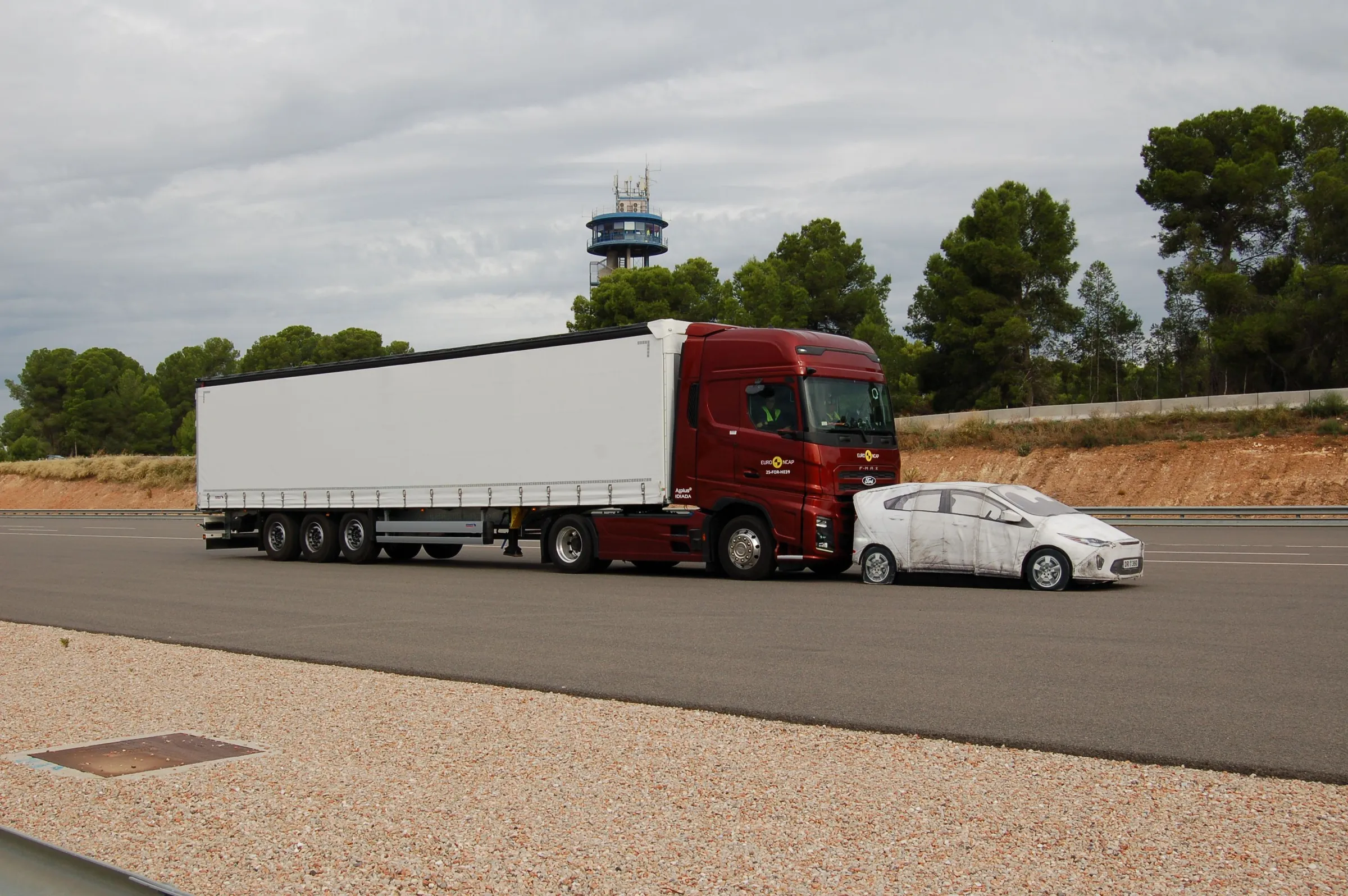
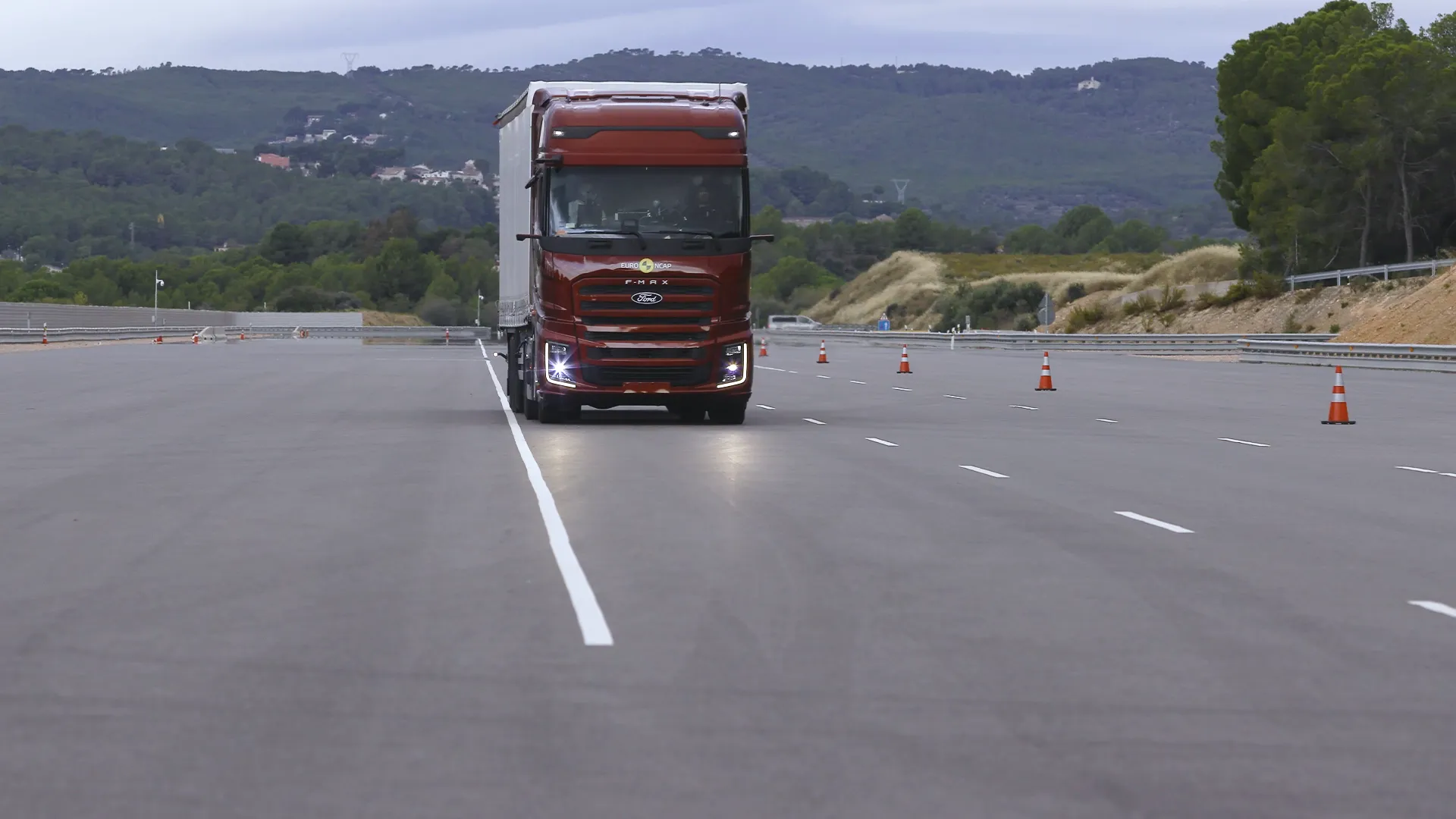
The F-MAX offers a solid 3-star safety performance, delivering in both Safe Driving and Collision Avoidance. Whilst its direct vision is average for a long haul cab, the optional camera monitor system enhances both direct and indirect vision with improved close proximity and rear views. Ford offer a broad range of driver support and crash avoidance technologies, examples of which include an ACC system that can automatically adjust to the local speed limit and a high performing AEB system that provides very effective protection in vehicle front to rear collisions. AEB for frontal collisions with vulnerable road users is optional, but AEB for nearside turning collisions with cyclists is not available, suggesting that the Ford F-MAX is more suited to highway operations.
The F-MAX offers a solid 3-star safety performance, delivering in both Safe Driving and Collision Avoidance. Whilst its direct vision is average for a long haul cab, the optional camera monitor system enhances both direct and indirect vision with improved close proximity and rear views. Ford offer a broad range of driver support and crash avoidance technologies, examples of which include an ACC system that can automatically adjust to the local speed limit and a high performing AEB system that provides very effective protection in vehicle front to rear collisions. AEB for frontal collisions with vulnerable road users is optional, but AEB for nearside turning collisions with cyclists is not available, suggesting that the Ford F-MAX is more suited to highway operations.
The F-MAX offers a solid 3-star safety performance, delivering in both Safe Driving and Collision Avoidance. Whilst its direct vision is average for a long haul cab, the optional camera monitor system enhances both direct and indirect vision with improved close proximity and rear views. Ford offer a broad range of driver support and crash avoidance technologies, examples of which include an ACC system that can automatically adjust to the local speed limit and a high performing AEB system that provides very effective protection in vehicle front to rear collisions. AEB for frontal collisions with vulnerable road users is optional, but AEB for nearside turning collisions with cyclists is not available, suggesting that the Ford F-MAX is more suited to highway operations.


Seat Belt Usage | |
Driver Monitoring | |
Direct Vision | Volume:7.4m³ | |
Indirect Vision | |
Speed Assistance | |
Adaptive Cruise Control | |
Car | |
Pedestrian & Cyclist | |
Lane Departure | |
Car | |
Turn Across the Path of a Cyclist | |
Rescue Sheet & Guide | |
External Labelling | |
Advanced e-Call | |
Occupant Extrication | |
Rescue Sheet & Guide |  | |
External Labelling |  | |
Advanced e-Call | | |
Occupant Extrication | | |
Rescue Sheet & Guide | | |
External Labelling | | |
Advanced e-Call | | |
Occupant Extrication | | |
AEB | | |
AEB Pedestrian & Cyclist |  | |
Cyclist Nearside Turn |  | |
Lane Keep Assist | | |
Emergency Lane Keeping | | |
Seat Belt Reminder Driver | | |
Seat Belt Reminder Passenger | | |
Seat Belt Reminder Centre Passenger | | |
Attention Assist Direct Monitoring | | |
Attention Assist Indirect Monitoring | | |
e-Mirrors Class II & Class IV | | |
Speed Assistance | | |
Adaptive Cruise Control | | |
Lower Door Window | | |
Note: Other equipment may be available on the vehicle but was not considered in the test year.