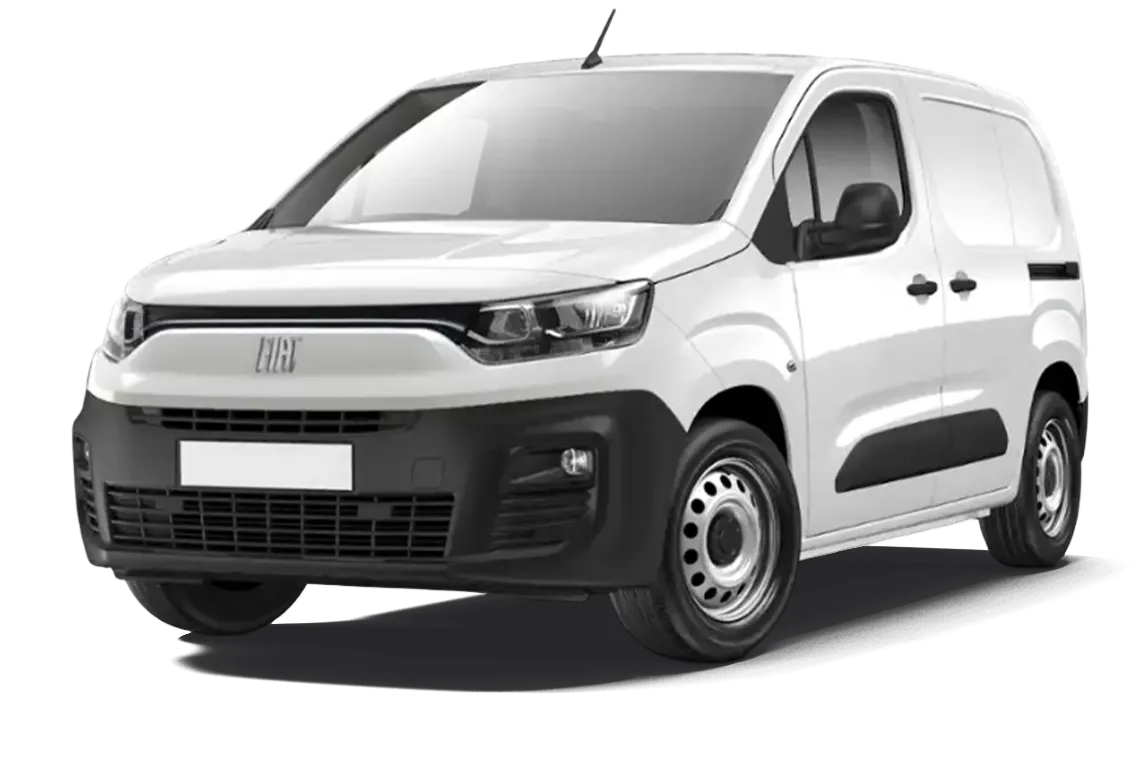
The van tested was the electric version of the Citroën Berlingo, a twin of the Doblo.The FIAT Doblo comes with a variety of powertrains and the rating applies to all.
Much of the safety equipment on the Doblo comes as an option. This is disappointing, as it comes as standard on the passenger versions of the van. The safety systems show limited performance compared with competitors in this segment and the Doblo offers a Gold level of safety to those willing to pay for the options.The autonomous emergency braking (AEB) system uses camera-based technology to detect other vehicles and vulnerable road users such as pedestrians and cyclists. Performance is good when approaching a stationary or slower-moving car at lower speeds, but deteriorates as test speeds increase. However, performance is symmetrical, reacting equally well to a target vehicle is straight in front of it or offset to one side or the other. Unlike some of its competitors, the Doblo does not react to a vehicle which turns across its path. With a pedestrian target, the systems performs well or adequately in the simpler scenarios, with some drop-off when tested in night-time conditions, but does not intervene if a pedestrian is behind the van as it reverse or when the van turns into the path of a crossing pedestrian. In Euro NCAP's tests, the Doblo showed very little reaction to a cyclist.
The lane support system includes lane departure warning, which signals to the driver when the van is drifting out of lane, and emergency lane keeping, which intervenes more aggressively in certain critical situations to prevent the van from leaving the road. The system performed well in all tests, but does not include blind spot monitoring.
The Doblo uses a camera to identify the local speed limit and provides the information to the driver, allowing the limiter to be set accordingly. The limiter is able to maintain the set speed to within 5 km/h.
A seatbelt reminder is standard for the driver and front passenger seat, and the Doblo recognises steering behaviour which is characteristic of fatigued driving, alerting the driver to the need for a break.
The van tested was the electric version of the Citroën Berlingo, a twin of the Doblo.The FIAT Doblo comes with a variety of powertrains and the rating applies to all.
Much of the safety equipment on the Doblo comes as an option. This is disappointing, as it comes as standard on the passenger versions of the van. The safety systems show limited performance compared with competitors in this segment and the Doblo offers a Gold level of safety to those willing to pay for the options.The autonomous emergency braking (AEB) system uses camera-based technology to detect other vehicles and vulnerable road users such as pedestrians and cyclists. Performance is good when approaching a stationary or slower-moving car at lower speeds, but deteriorates as test speeds increase. However, performance is symmetrical, reacting equally well to a target vehicle is straight in front of it or offset to one side or the other. Unlike some of its competitors, the Doblo does not react to a vehicle which turns across its path. With a pedestrian target, the systems performs well or adequately in the simpler scenarios, with some drop-off when tested in night-time conditions, but does not intervene if a pedestrian is behind the van as it reverse or when the van turns into the path of a crossing pedestrian. In Euro NCAP's tests, the Doblo showed very little reaction to a cyclist.
The lane support system includes lane departure warning, which signals to the driver when the van is drifting out of lane, and emergency lane keeping, which intervenes more aggressively in certain critical situations to prevent the van from leaving the road. The system performed well in all tests, but does not include blind spot monitoring.
The Doblo uses a camera to identify the local speed limit and provides the information to the driver, allowing the limiter to be set accordingly. The limiter is able to maintain the set speed to within 5 km/h.
A seatbelt reminder is standard for the driver and front passenger seat, and the Doblo recognises steering behaviour which is characteristic of fatigued driving, alerting the driver to the need for a break.
The van tested was the electric version of the Citroën Berlingo, a twin of the Doblo.The FIAT Doblo comes with a variety of powertrains and the rating applies to all.
Much of the safety equipment on the Doblo comes as an option. This is disappointing, as it comes as standard on the passenger versions of the van. The safety systems show limited performance compared with competitors in this segment and the Doblo offers a Gold level of safety to those willing to pay for the options.The autonomous emergency braking (AEB) system uses camera-based technology to detect other vehicles and vulnerable road users such as pedestrians and cyclists. Performance is good when approaching a stationary or slower-moving car at lower speeds, but deteriorates as test speeds increase. However, performance is symmetrical, reacting equally well to a target vehicle is straight in front of it or offset to one side or the other. Unlike some of its competitors, the Doblo does not react to a vehicle which turns across its path. With a pedestrian target, the systems performs well or adequately in the simpler scenarios, with some drop-off when tested in night-time conditions, but does not intervene if a pedestrian is behind the van as it reverse or when the van turns into the path of a crossing pedestrian. In Euro NCAP's tests, the Doblo showed very little reaction to a cyclist.
The lane support system includes lane departure warning, which signals to the driver when the van is drifting out of lane, and emergency lane keeping, which intervenes more aggressively in certain critical situations to prevent the van from leaving the road. The system performed well in all tests, but does not include blind spot monitoring.
The Doblo uses a camera to identify the local speed limit and provides the information to the driver, allowing the limiter to be set accordingly. The limiter is able to maintain the set speed to within 5 km/h.
A seatbelt reminder is standard for the driver and front passenger seat, and the Doblo recognises steering behaviour which is characteristic of fatigued driving, alerting the driver to the need for a break.


Seat Belt Usage | |
Driver Monitoring | |
Speed Assistance | |
Adaptive Cruise Control | |
Steering Assistance | |
Car | |
Pedestrian & Cyclist | |
Lane Departure | |
Car | |
Pedestrian | |
Rescue Sheet & Guide | |
Advanced e-Call | |
Occupant Extrication | |
AEB Car |  |
AEB Pedestrian & Cyclist | |
Lane Support Systems | |
AEB Car | |
AEB Pedestrian & Cyclist | |
Lane Support Systems | |
Seat Belt Reminder Driver | |
Seat Belt Reminder Passenger | |
Driver Monitoring |  |
Speed Assistance | |
Adaptive Cruise Control | |
Steering Assistance |  |
Note: Other equipment may be available on the vehicle but was not considered in the test year.