A safer truck must protect its occupants and help protect other road users involved in the case of an accident, but more importantly strive to avoid the crash in the first place. Heavy vehicles represent only 3% of vehicles on Europe’s roads yet they are involved in almost 15% of all EU road fatalities. Due to their size, other road users including smaller vehicles on motorways and pedestrians and cyclists in cities are more at risk of severe injury in the case of an incident. Euro NCAP’s Safer Truck assessment programme aims to encourage manufacturers to upgrade safety solutions in commercial vehicles far above the regulation that exists today.

A star rating that evaluates the safety of commercial vehicles can incentivise good performance, allow optimisation of operational safety and cost, will accelerate regulatory efforts to improve truck safety and meet targets of zero road casualties and fatalities on European roads.
Euro NCAP’s star rating system makes it easy to identify the safest vehicles for your operation. Every new truck tested by Euro NCAP’s safety experts is assessed through a comprehensive range of tests across multiple safety pillars and awarded a score from zero to five stars. To ensure a fair and balanced overall result, strengths in areas such as vision are weighed against performance in others, such as collision avoidance. The combined pillar scores are then translated into an overall star rating, ranging from zero stars to five stars.

Five stars: A vehicle that offers superior safety across a wide range of functionalities and offers the best protection for both occupants and those around the vehicle combining good vision with high performing collision avoidance systems.

Four stars: A vehicle that offers significant safety benefits across a range of functions and offers a good balance for both city and highway operation.

Three stars: A vehicle that offers some significant safety functionality beyond legal requirements but only in certain areas. Care should be taken to consider the likely area of operation – Cities or highways and ensure the safety functionality is appropriate.

Two stars: A vehicle that just passes current regulations and offers some safety systems or functions beyond legal requirements. Other vehicles offer more safety.

One star: A vehicle that just passes current regulations and offers some minor additional safety functionality.

Zero stars: A vehicle that just passes current regulations and offers no safety systems or functions beyond legal requirements.

In addition to the star rating Euro NCAP offers a CitySafe award to highlight vehicles that are most appropriate for inner city operation, these vehicles must have good direct and indirect vision and have a minimum level of collision avoidance functionality that help protect cyclists, motorised two wheelers and pedestrians.
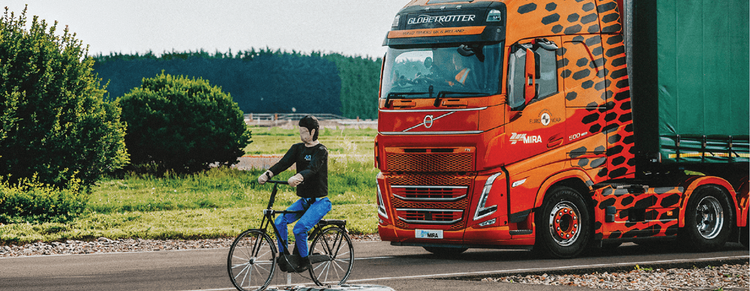
Euro NCAP carries out numerous tests and evaluations of all relevant safety technology. The functionality evaluated often goes beyond that required by law and aims to identify those systems that offer significantly better performance to protect your driver and brand. The tests are designed to reflect real-life accidents, helping fleets and businesses choose the safest option for their operation. Truck safety is evaluated in 4 key areas or pillars representing the stages of a crash.
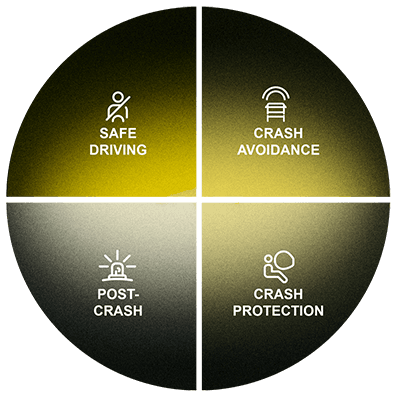
Safe Driving represents the hours and minutes before a crash where drivers may need support. Euro NCAP evaluates driver monitoring systems to ensure a drowsy driver is alerted and that safety belts are worn. Due to their inherent size, good driver vision is vital. Camera monitoring systems offer significant benefits in enhanced vision.
Crash Avoidance represents the seconds prior to a collision where Advanced Driver Assistance Systems (ADAS) can help mitigate or avoid a collision. Systems such as Autonomous Emergency Braking (AEB) can identify a vehicle in front or a crossing pedestrian and automatically brake. Lane Keep Assist (LKA) can prevent a distracted driver from crossing a lane into the path of an oncoming car.
Crash Protection, coming into force in 2031, encourages manufacturers to protect their drivers during an actual crash with improved restraints – airbags and pretensioners.
Post-Crash Safety focuses on the so-called golden hour; the vital 60 mins that the emergency services require to get access to occupants involved in vehicle crashes. eCall technologies can help notify where a collision has occurred.
Truck safety considers two issues. The safety of the driver and the safety of those around the truck, particularly those more vulnerable. Due to the size differential most casualties are unfortunately outside of the truck, either car occupants in higher speed crashes or pedestrians and cyclists in towns and cities. Euro NCAP's tests evaluate how well the commercial vehicle protects occupants and other road users and consider various aspects of a truck safety performance, including in particular driver vision and its fitment of safety technologies.
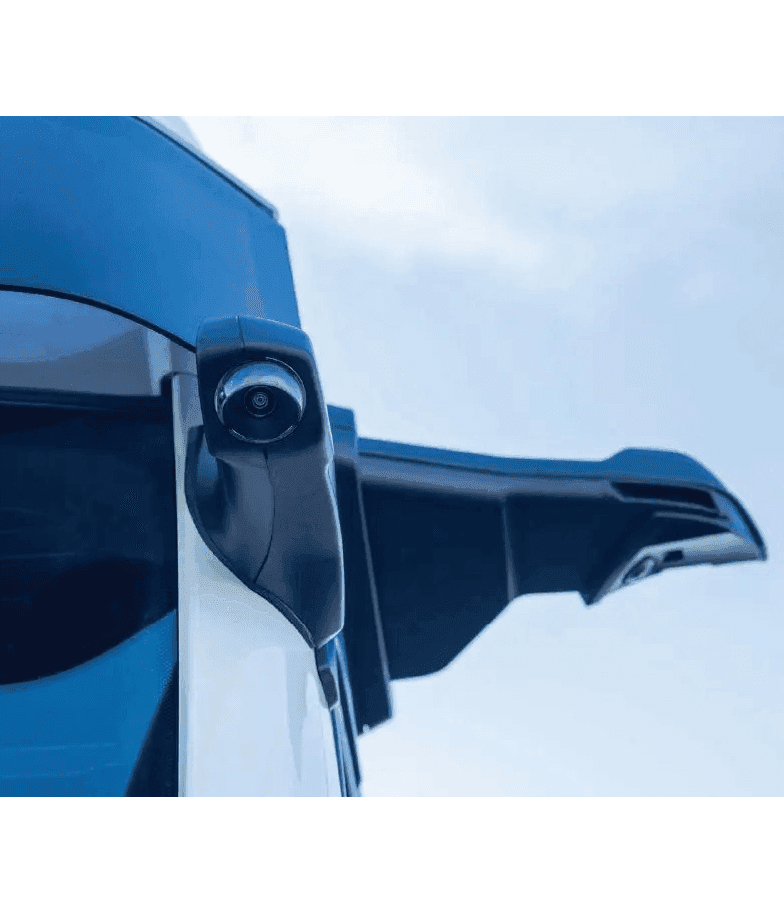
Good direct vision is vital to ensure that drivers can have a 360 view around their cabs, particularly to safeguard pedestrians and cyclists that may enter ‘blind spots’ in their viewpoint. Mirrors play an important role in indirect vision. Mirror positions (behind - class 2/4) and (side and front - class 5/6) are mandated by regulation. Euro NCAP’s Safer Trucks programme encourages manufacturers to replace optical mirrors with camera monitoring systems. These systems give a wider field of view, automatically panning as a vehicle turns and can help make low speed manoeuvring safer as well. They also give a clearer view at night and can support the driver in challenging weather conditions.
Advanced Driver Assistance Systems (ADAS) combine sensors to help predict a potential collision and warn or intervene to help prevent casualties and damage. Cameras and radars can identify other vehicles, pedestrians and cyclists and can warn the driver or ideally intervene to help mitigate or prevent a collision Technologies encouraged by Euro NCAP aim to address crashes by automatically braking the vehicle to prevent the collision. Cameras are also employed to monitor road markings and help ensure the vehicle does not inadvertently steer out of lane. At the same time, Euro NCAP intends to ensure that these systems do not annoy the driver when a warning is unnecessary.
Euro NCAP evaluates seatbelt reminder systems to ensure occupants wear their seatbelts at all times and encourages speed limiter systems that not only manage vehicle speed but also assist drivers in recognising the appropriate speed limits for their vehicle.
Driver drowsiness is a serious risk, especially for commercial vehicle drivers who often travel long distances. For this reason, Euro NCAP encourages advanced driver monitoring systems that directly monitor the driver’s state and, where necessary, intervene — including bringing the vehicle to a safe stop if the driver becomes unresponsive.