
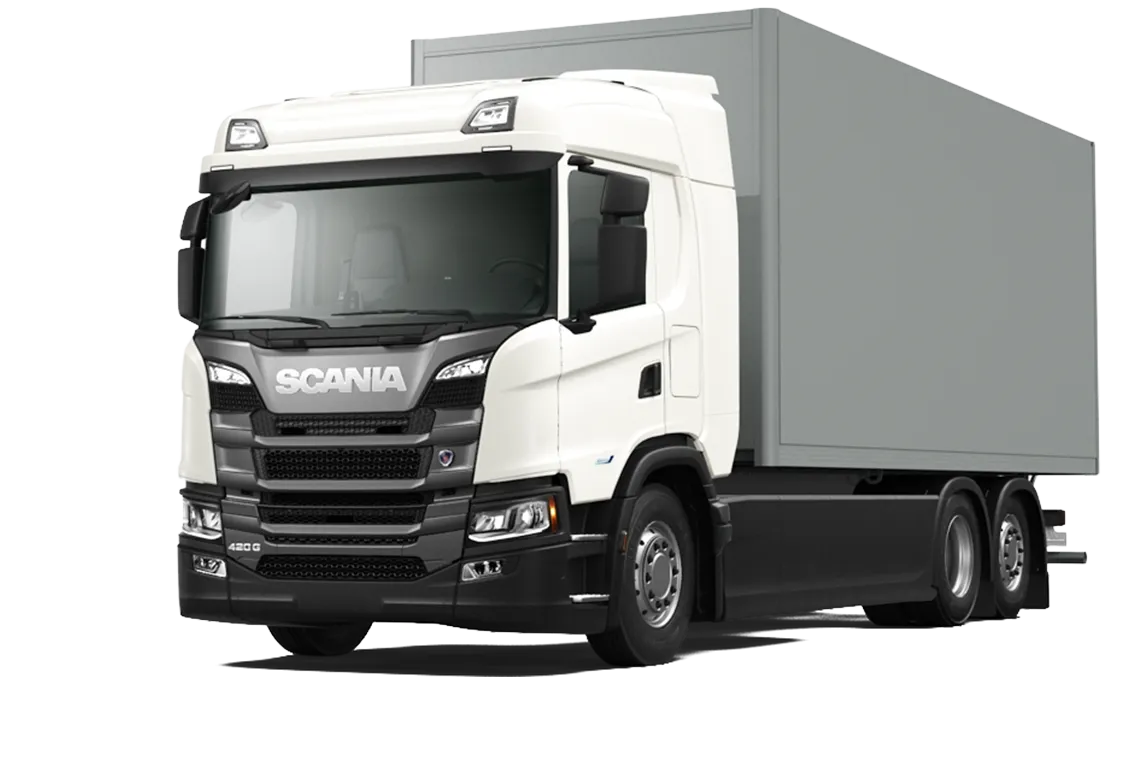


The Scania G-series was not retested in 2025, instead the manufacturer verified that the 2024 tractor rating is also applicable to this rigid version. The G-series benefits from a lower cab than the R-series, improving vision. The vehicle is a solid and safe performer with a balanced approach across the Safe Driving and Collision Avoidance categories. It is available with nearly all of the driver assistance systems that Euro NCAP consider and they generally perform well, but many are optional at additional cost. The vision fundamentals are good and safety is enhanced by the lower cab mounting height. However the end result is still limited by the lack of a full coverage camera monitor system, like that available on competitor vehicles, which Euro NCAP believes enhances safety further. Its Collision Avoidance performance in most areas is good and its active pedestrian and cyclist protection combined with good vision earns it our CitySafe award. Overall, its a safe choice in a mix of environments, a safe allrounder provided that the appropriate options are selected at purchase.
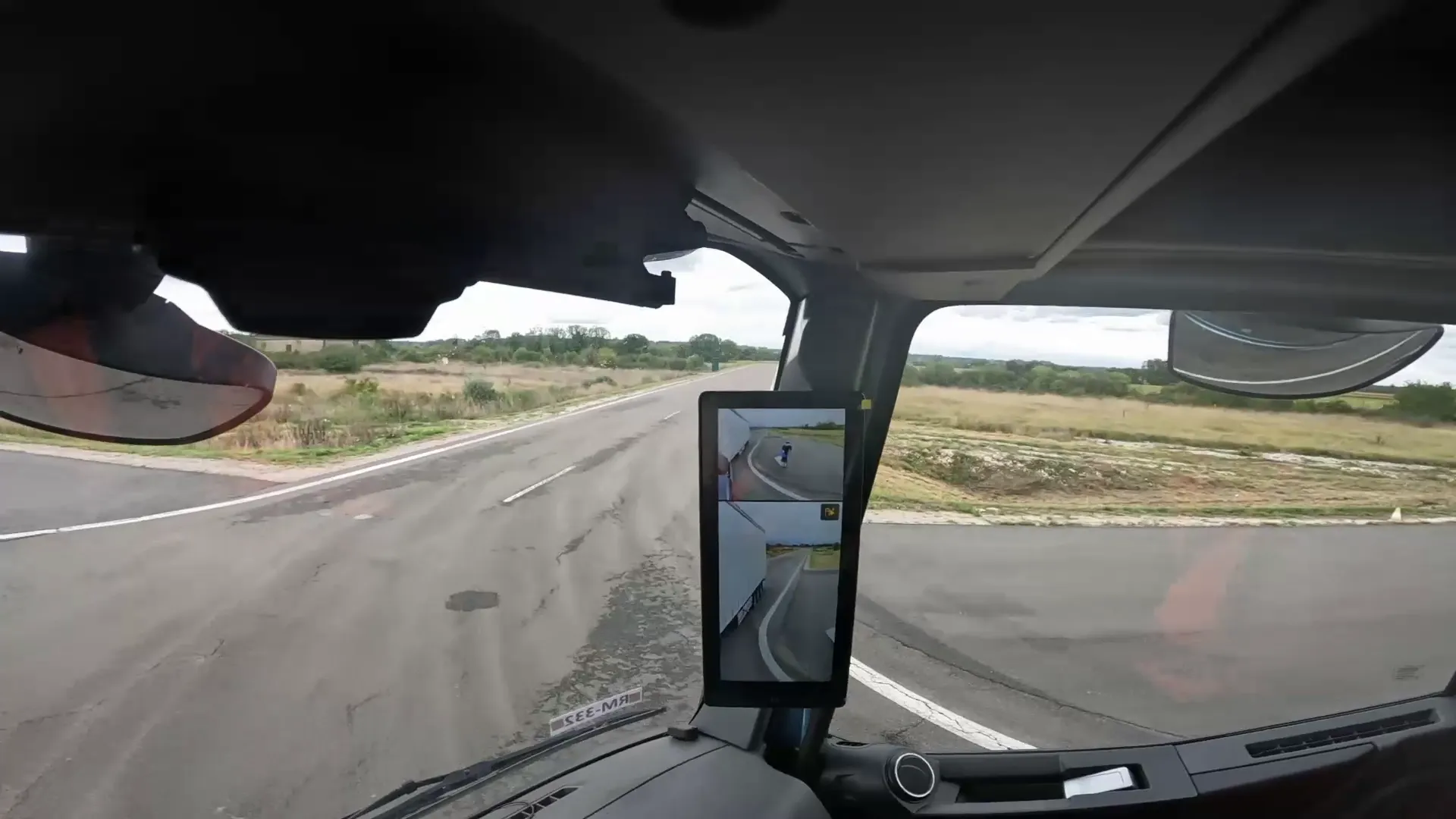
The G-series achieves a good performance in the Safe Driving category. It benefits from deep windows with a low belt line improving driver vision, their eyepoint being lower than in many other vehicles in the long haul sector, enhancing safety especially in city and urban environments. However, this good vision score is compromised by the use of conventional class II/IV mirrors. The optional camera monitor system improves class V/VI front corner vision, but duplicating the conventional mirrors risks an increase in driver workload. A seat belt reminder is fitted on all seats, encouraging belt use. The attention assist system exceeds minimum legal requirements without excessive false alerts. A close following distance warning is not available. Use of the ACC can reduce the risk of front to rear collisions and is especially beneficial on highways.
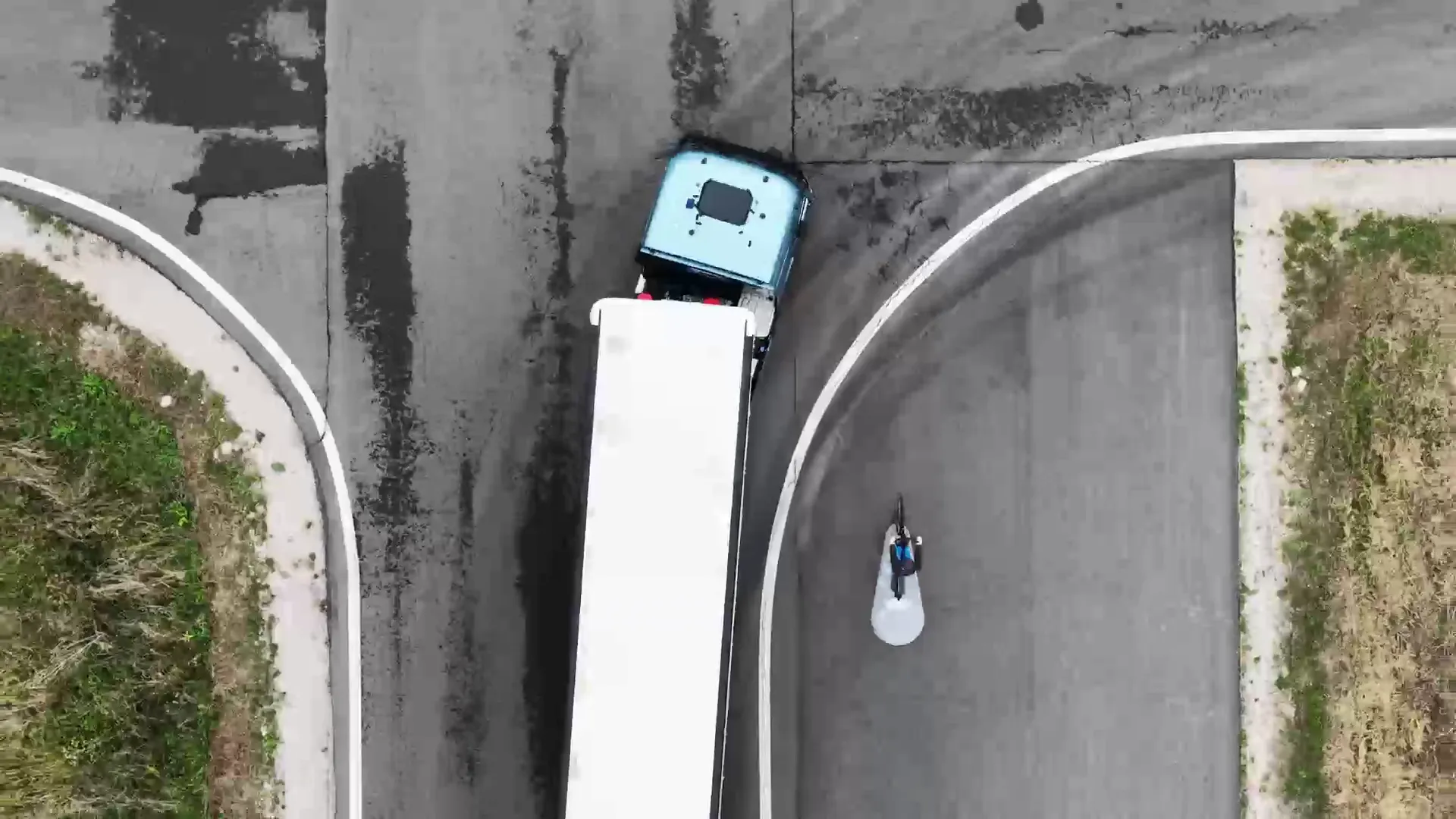
The G-series in rigid and tractor configuration has a range of crash avoidance technologies that perform well. It is equipped with an AEB system that is very good at avoiding collisions with other vehicles. An optional addition to the AEB is also good at avoiding frontal collisions with pedestrians and cyclists. Unintentional driver inputs during critical situations do not reduce system effectiveness. The system cannot be turned off easily and if turned off, automatically reactivates within 15 minutes. An AEB system that prevents nearside turning collisions with cyclists is not available. An optional lane support system is available, with adequate lane keeping performance but very good performance in lane change conflicts with other vehicles on highways.
The Scania G-series was not retested in 2025, instead the manufacturer verified that the 2024 tractor rating is also applicable to this rigid version. The G-series benefits from a lower cab than the R-series, improving vision. The vehicle is a solid and safe performer with a balanced approach across the Safe Driving and Collision Avoidance categories. It is available with nearly all of the driver assistance systems that Euro NCAP consider and they generally perform well, but many are optional at additional cost. The vision fundamentals are good and safety is enhanced by the lower cab mounting height. However the end result is still limited by the lack of a full coverage camera monitor system, like that available on competitor vehicles, which Euro NCAP believes enhances safety further. Its Collision Avoidance performance in most areas is good and its active pedestrian and cyclist protection combined with good vision earns it our CitySafe award. Overall, its a safe choice in a mix of environments, a safe allrounder provided that the appropriate options are selected at purchase.
The G-series achieves a good performance in the Safe Driving category. It benefits from deep windows with a low belt line improving driver vision, their eyepoint being lower than in many other vehicles in the long haul sector, enhancing safety especially in city and urban environments. However, this good vision score is compromised by the use of conventional class II/IV mirrors. The optional camera monitor system improves class V/VI front corner vision, but duplicating the conventional mirrors risks an increase in driver workload. A seat belt reminder is fitted on all seats, encouraging belt use. The attention assist system exceeds minimum legal requirements without excessive false alerts. A close following distance warning is not available. Use of the ACC can reduce the risk of front to rear collisions and is especially beneficial on highways.
The G-series in rigid and tractor configuration has a range of crash avoidance technologies that perform well. It is equipped with an AEB system that is very good at avoiding collisions with other vehicles. An optional addition to the AEB is also good at avoiding frontal collisions with pedestrians and cyclists. Unintentional driver inputs during critical situations do not reduce system effectiveness. The system cannot be turned off easily and if turned off, automatically reactivates within 15 minutes. An AEB system that prevents nearside turning collisions with cyclists is not available. An optional lane support system is available, with adequate lane keeping performance but very good performance in lane change conflicts with other vehicles on highways.
The Scania G-series was not retested in 2025, instead the manufacturer verified that the 2024 tractor rating is also applicable to this rigid version. The G-series benefits from a lower cab than the R-series, improving vision. The vehicle is a solid and safe performer with a balanced approach across the Safe Driving and Collision Avoidance categories. It is available with nearly all of the driver assistance systems that Euro NCAP consider and they generally perform well, but many are optional at additional cost. The vision fundamentals are good and safety is enhanced by the lower cab mounting height. However the end result is still limited by the lack of a full coverage camera monitor system, like that available on competitor vehicles, which Euro NCAP believes enhances safety further. Its Collision Avoidance performance in most areas is good and its active pedestrian and cyclist protection combined with good vision earns it our CitySafe award. Overall, its a safe choice in a mix of environments, a safe allrounder provided that the appropriate options are selected at purchase.
The G-series achieves a good performance in the Safe Driving category. It benefits from deep windows with a low belt line improving driver vision, their eyepoint being lower than in many other vehicles in the long haul sector, enhancing safety especially in city and urban environments. However, this good vision score is compromised by the use of conventional class II/IV mirrors. The optional camera monitor system improves class V/VI front corner vision, but duplicating the conventional mirrors risks an increase in driver workload. A seat belt reminder is fitted on all seats, encouraging belt use. The attention assist system exceeds minimum legal requirements without excessive false alerts. A close following distance warning is not available. Use of the ACC can reduce the risk of front to rear collisions and is especially beneficial on highways.
The G-series in rigid and tractor configuration has a range of crash avoidance technologies that perform well. It is equipped with an AEB system that is very good at avoiding collisions with other vehicles. An optional addition to the AEB is also good at avoiding frontal collisions with pedestrians and cyclists. Unintentional driver inputs during critical situations do not reduce system effectiveness. The system cannot be turned off easily and if turned off, automatically reactivates within 15 minutes. An AEB system that prevents nearside turning collisions with cyclists is not available. An optional lane support system is available, with adequate lane keeping performance but very good performance in lane change conflicts with other vehicles on highways.


Seat Belt Usage | |
Driver Monitoring | |
Direct Vision | Volume:11.3m³ | |
Indirect Vision | |
Speed Assistance | |
Adaptive Cruise Control | |
Car | |
Pedestrian & Cyclist | |
Lane Departure | |
Car | |
Turn Across the Path of a Cyclist | |
Rescue Sheet & Guide | |
External Labelling | |
Advanced e-Call | |
Occupant Extrication | |
Seat Belt Reminder Driver |  |
Seat Belt Reminder Passenger | |
Seat Belt Reminder Centre Passenger |  |
Attention Assist Direct Monitoring | |
Attention Assist Indirect Monitoring | |
e-Mirrors Class II |  |
e-Mirrors Class IV | |
e-Mirrors Class V | |
e-Mirrors Class VI | |
e-Mirrors Class II & Class IV | |
Speed Assistance | |
Adaptive Cruise Control |  |
Lower Door Window | |
Seat Belt Reminder Driver | |
Seat Belt Reminder Passenger | |
Seat Belt Reminder Centre Passenger | |
Attention Assist Direct Monitoring | |
Attention Assist Indirect Monitoring | |
e-Mirrors Class II | |
e-Mirrors Class IV | |
e-Mirrors Class V | |
e-Mirrors Class VI | |
e-Mirrors Class II & Class IV | |
Speed Assistance | |
Adaptive Cruise Control | |
Lower Door Window | |
AEB | |
AEB Pedestrian & Cyclist | |
Lane Keep Assist | |
Cyclist Nearside Turn | |
Emergency Lane Keeping | |
Rescue Sheet & Guide | |
External Labelling | |
Advanced e-Call | |
Occupant Extrication | |
Note: Other equipment may be available on the vehicle but was not considered in the test year.